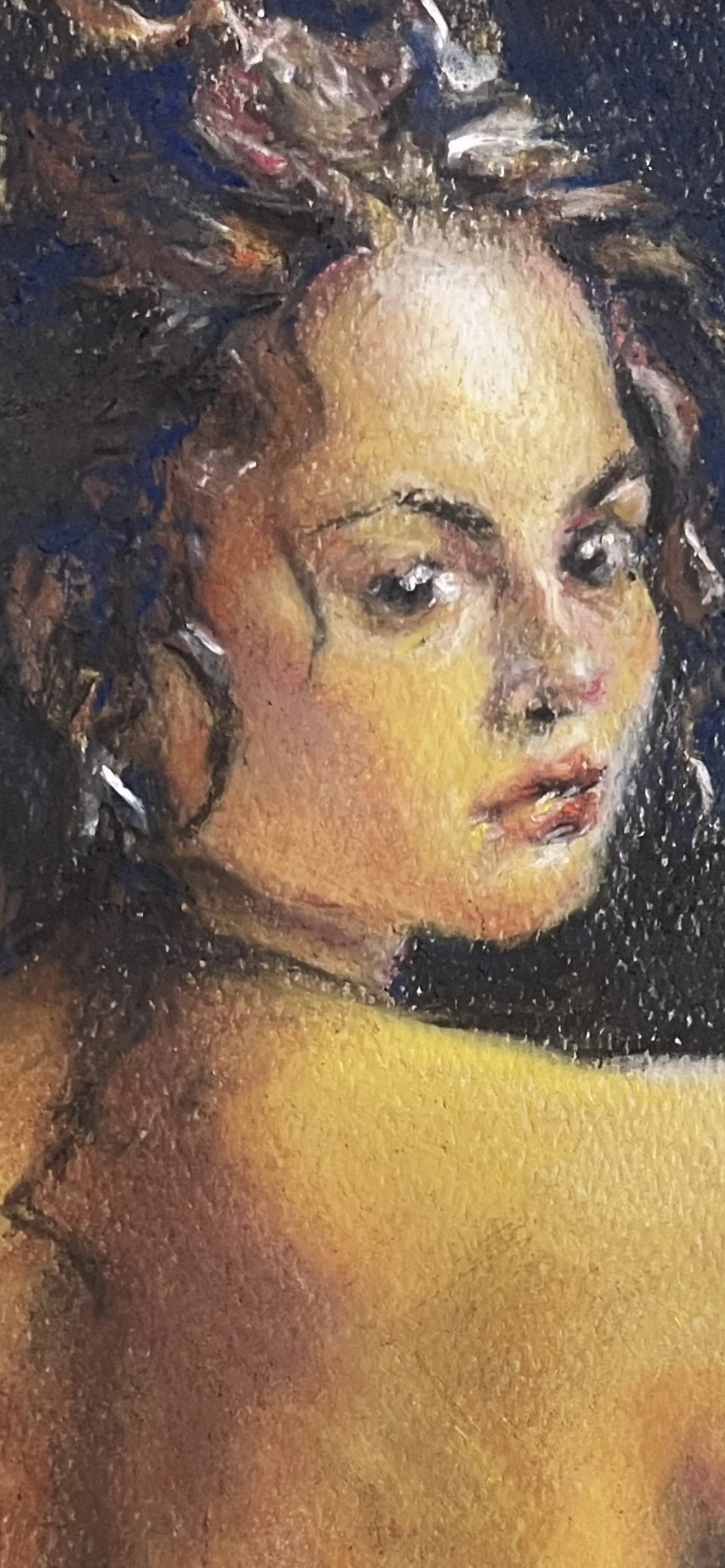
“Symmetry of Ruby Margot”
An original short story, first published in Popshot Magazine, Mystery Issue 27, 2020.
“The Symmetry of Ruby Margot has echoes of some great Russian writers in its style.”
1606 – Porto Ercole, Italy.
You can’t unfeel the kickback from the gun that kills your enemy. Its dark yellow weight rushes over you, where it stays, lingering at your back, living in the echo of your shadow.
Ruby’s shadow was thick and hard against the docking bay at Porto Ercole when kickback climbed aboard in the summer of 1606. Had the sailor kept the hessian bag over her head, or indeed had he been beautiful or kind, her life may have taken a different turn. But beautiful and kind were rarely found aboard bounty vessels, docked off course owed to violent storms.
The captain took this opportunity to cut loose sick slave cargo and hooded Ruby appeared to be just that. Her still, tied wrists gave impressions of a woman nearing last breath, but under the hood, a twelve-year-old Ruby was starved and fear-ridden. Bolting horses ran through her mind, leaping from one wild electric panic to the other. And they did not slow when her eyes met daylight.
The sailor, unquestioning why she was hooded, removed the hessian in one swift, unkind yank. Then quickly—a rush as her face hit its mark and the full weight of his own sharp grief gushed forth to greet him.
He buckled. Tried to look away.
That face.
Though she did not know it, Ruby Margot was beautiful.
Her face held endless symmetry in all its angles—each a string of reflected kaleidoscopic questions, the types of questions that seep forth when the darkest places within us are called upon.
The sailor dropped her in agony, muscle memory retrieved the pistol from its trusty holster and fire! fire! No time to aim.
Ruby heard two cogs of the wheel. What choice did she have, then?
She lunged forward, kicked the pistol upwards as the cogs kept turning, one wild horse after another until a bullet released hot and loud into the eye socket of the sailor. He cried aloud before a final anguish of loneliness swept across his face. He fell heavily to the ground as Ruby turned on hot heels. She heaved the burden of loss on her back and darted through the crowd, face trained to the ground, and headed towards the only road out.
The road split a cluster of buildings clean down the middle. House Noir, the first on the right, saw many a sailor back to good spirits and gave many a girl a home.
Now, a woman stood on its uneven front stoop, flipping a coin like a heartbeat. Her name was Matron Fé and she had seen the incident unfold.
They always came via the sea, never the road. Just as Fé herself came to be here. She met the mistress of the house on this very stoop, a woman named Gria who recognised worth in even the ugliest of things.
“Anything that separates man from money,” she told Fé along with a story of how she stole her father's wristwatch from his drunken paw to pay passage here—a watch, she noted, that comprised the entirety of his fortune.
And so it went, Fé ran the smoothest pickpocket operation 'til Gria was cold in the ground at which point Fé became Matron of the house.
Now, Ruby reminded Fé of herself, not in size for the girl was slight and terribly bony, but something about her will. Most girls came running towards Fé, mistaking her for a mother.
Fé slid the coin into her pocket.
“Girl!” she shouted after Ruby, “stop!”
Fé caught up and spun Ruby hard around.
“My God!” Fé’s plump middle gave burden to thirsty lungs as she bent double in pain, “my God,” she repeated. She wanted to say more, she wanted to release all the dark thoughts suddenly queuing on her tongue, but couldn’t. Ruby’s face simply wouldn’t let her.
Eventually, Fé stabbed a robust finger at Ruby. She hoped it said, ‘we’re on the same side, kiddo.’ And without again looking at her face, Fé dragged Ruby back to House Noir and stuffed her into the room at the end of the hallway. The room that hadn’t been unlocked since its last occupant painted the hand of God clutching a severed head on the wall.
With Ruby inside, Fé locked the door.
#
Three months earlier - Rome, Italy
Burdens were heavy in the city of Rome as time broke the back of May.
When you walk with God in one ear, you walk with the devil in the other. It had become a twisted sort of mantra that Caravaggio couldn’t shake since completing Goliath beheaded by David—a painting that aroused wildly curious questions loose upon his mind with each stroke on the canvas.
The open time between works gave room for his loud thoughts. His own David, the boy who lay waiting for him between the sheets this very moment, the boy he left to fill his belly with ale, was not enough to drive the noise out. No, only the voice of a paintbrush brought the sweet relief of confession.
Caravaggio stood too quickly and the ale swayed him.
“Another!” he said to the room and left. Several of his friends followed him out.
Caravaggio knew that the company he kept shone a disreputable light upon him and although they jested together, a group of buddies to the outward eye, their shallow sight and ignorance to life’s darker shades weighed awkwardly upon him, causing him to both despise and envy them.
But they were only ever themselves and at this moment they filled the gap where angry ghosts of mind would be and so, he was grateful.
A noise from behind made Caravaggio fall back a step, then—
“Painter!” A scabbard clad sword pressed between his shoulder blades, “Captain Tommasoni here—I challenge you, painter, to a duel!”
Fury ignited quick and hot within Caravaggio, this was not how one challenged a man to a duel! He turned to face Tommasoni, a thug of a man who is never the same for any string of days, “you are not an interesting man to fight,” he spat.
Tommasoni laughed right up in Caravaggio’s face as figures stepped out of the shadows, crowding him.
He was surrounded.
Caravaggio saw his friends, also in a losing position, outnumbered with their backs against railings and their tempers thrashing. No one was going down without a fight this night.
“No,” Tommasoni said, “I am a man who is interested in fighting for his name. And I hear you have a loose tongue when it comes to my reputation.”
The energy shifted, the colours around the minds of the thugs deepened as fear entered the space.
Caravaggio drew his sword.
When you walk with God in one ear, you walk with the devil in the other.
His haunted mind might be busy in the quiet of night, but faced with a fight for life his ego always alerted him into sharp alignment.
Time—all he wanted was as much of it as possible. There were simply too many mysteries left to unravel.
Besides, he hated Tommasoni and refused to die by his will.
The offered duel was pulled clean off the table when Tommasoni struck first and the surrounding figures drew swords, unwinding a brawl upon the cobbled ground.
Still, Caravaggio fought precisely.
Several men down, Caravaggio lunged forward towards Tommasoni, splitting his thigh on a passing blade. The two men fought, danced for their lives to the music of their swords as maniacal laughter roared in Caravaggio’s ear.
Then Tommasoni’s stumbled backwards. He fell to the ground and Caravaggio aimed the blade at his throat. Tommasoni made to speak—would he remain arrogant to the end?—but a neighbouring duel clipped into Caravaggio, forcing his sword neatly to meet Tommasoni’s end.
The laughter in Caravaggio’s ear turned into a hard silence. It crawled over him, finding unearthly rest in his shadow.
#
1610 – Porto Ercole, Italy
Ruby met her sixteenth year with all her teeth and virginity intact. Matron Fé had not introduced her to the ways of House Noir as with the other girls.
Instead, she was kept away from men like a dark secret, for Ruby set questions upon their minds of God and pittance and sin—all they had come to this very place to forget.
If you asked Fé why she kept Ruby locked away in that room, with only a straw mattress and a beheading for company, she’d tell you, ‘for your own good’. And she’d be half right.
The other half was greed, largely disguised as curiosity and good business acumen for Fé kept Ruby as a weapon. A weapon to break men open, to tear at their insides with invisible torment that only truth and surrender could salve.
And when Ruby wasn’t being used as a weapon? Fé didn’t let her starve, but she also didn’t nourish her with any sort of kindness.
Ruby was sixteen now. She had grown into womanhood in isolation—an unfortunate way to bloom. The first night Ruby spent in House Noir, alone with Caravaggio’s beheading and the pleasure cries of men from the surrounding rooms, she unravelled.
This was hell.
She called every stitch of herself into question and found only repulsion for an answer.
Her body shook late at night and liquid ghouls rode horses through her dreams. She heaved great lumps of debris from her soul as she sobbed out her isolation madness.
The body, she learned would both contain and not contain her simultaneously. It could transform whatever the mind suppressed and survive what the mind could not yet transform.
And, she had the painting.
Perhaps Fé had intended it to frighten Ruby but it never did. She found great release and comfort from the heat preserved in the intricate brushstrokes.
Whoever had painted this had also taken a life without intent.
It was truly a masterpiece and Ruby learnt each stroke by heart, calmed herself in the minutia of detail—the way the expression hinted at knowing answers to the great mysteries of life.
Months had passed now without Fé calling on Ruby—would her face cause the same reaction now? She had spent time in long conversation with the depths of herself and found a river of life that connected her to everyone beyond this room. She experimented with thought, found empty streets at the bottom of desperation and repetition in suffering.
Gradually, she undid her torments and released her fear. Spent hours befriending her breath—a continuous change both from within and without.
She cultivated a stillness that held time.
Now Ruby understood that there was no misfortune. For even the most turbulent pains are fortune unfolding. There are no sides to life—only the angle of perception toward a whole. A whole where great suffering births great light.
#
1610 - Naples, Italy
It had been four years since the death of Tommasoni when Caravaggio received pardon news from Rome. He had spent his escaped time in Naples, buried in work. It was hard to get paintings commissioned there and he detested being away from Rome.
The pardon, however, found Caravaggio unwell—a fact he refused to admit. The years had not been kind to his body or his mind. The two groped at odds with each other in delusions to deny the inevitable.
Caravaggio had seen a person die from lead poisoning—he knew it, but he rejected knowing it.
Now he was boiling with fever as he bartered for passage on a boat to Rome. The bartering turned argumentative with the captain, who it seemed wanted extra fare for the paintings as cargo. Caravaggio assured the captain that rich men awaited these works and that he’d be handsomely rewarded for giving them a fair passage and good rate.
“Rich great rewards! Life of demons! Works of God!” Caravaggio maintained himself coherent but he rumbled for words like diamonds in the dirt and his stench had ripened beyond aroma.
“You’ll be dead by Rome,” the captain said, “so you pay extra for cargo.”
Caravaggio shouted an incoherent gargoyled reply to the captain, who took his money and said simply, “keep your madness in your head,” before walking away.
Caravaggio secured the paintings clad in hessian and made himself a bed-nook nearby.
He was asleep almost instantly and in a blink awoken again by a deep crack of thunder and shouts from the captain. A storm had hit shortly after they departed, now the sea was unrideable. The captain made the call and they pulled in at the next port.
Caravaggio’s short sleep did nothing to orient him, he swayed on the dock, his eyes not seeing straight.
“There!” he heard in triple tone and was set upon by a gang of men. No! A gang of policemen!
Caravaggio met the restraint with crashing resistance. He tried repeatedly to convince them they were mistaken, for truly he had not committed the crimes of which they spoke. But no one listens to the ramblings of a madman and Caravaggio was forced to spend the night in a cell with a short thief who was missing his left eye. “Left for luck,” he said when he thought Caravaggio was staring at it.
Caravaggio wasn’t staring, at least not at anything outside his head. Fear had taken hold of him as his mind crafted riddles he was too fevered to solve.
By morning he was released for being the wrong man without a hint of apology and when he reached the port, the boat, along with the entirety of his work, was gone.
He cursed everyone that passed, eventually wearing himself even closer to the grave. And so with nothing else for it, Caravaggio headed to Rome by foot. It wasn’t long before a rare sense of déja vu grounded him. By God! He’d been here before! On his last fevered journey of escape from Rome.
The memory of a self-portrait painted with an injury fevered mind came tumbling back to him. Where was it again? Comfort and urgency rushed into him at once—the brothel house.
Caravaggio found House Noir easily, remembered by its uneven front stoop.
“I need to see it!” he said as he barrelled past Matron Fé with the feral frenzy of a dying man.
“That room is occupied!” Fé shouted after him, but it was useless. Caravaggio rammed the door like a demented ox, his eyes wild with a volcanic panic.
Ruby stood calmly waiting on the other side, waiting for the moment Caravaggio burst the door’s resistance.
Then—
Fé braced herself for the torrent of thrashing that would surely follow the door giving splintered way.
Instead—silence.
A rich and wonderful silence.
The wild, gnashing teeth of Caravaggio’s fury thundered into Ruby’s stillness and it instantly transformed into a flowing river.
She was paradise to the eye.
Caravaggio fell hard to his knees in what Ruby would later recall as surrender.
What has been seen cannot be unseen.
Caravaggio framed Ruby in the low light of the room, his mind traced the edges of shadows and the details aligned in perfect symmetry, computing them to memory. This was his practice, to recall later that which he cannot take with him.
Paintbrush in hand he would capture truth in the perfect balance of creation where life and death live in one harmonious cycle. Where only perception determines horror and the heat of his brushstrokes would embed time with his understanding.
Brushstrokes he’d never make.
His time had come.
“You freed me,” Ruby spoke in a way that sounded like the ocean.
He had once been on the lips of all the dark souls in Rome, capturing the unasked as he did. Some nights he’d imagine their prayers taking part of him up into the sky, where his fame rose up, burning against the edges of the world like smog.
Now he sees there is no one at the end of a prayer line, only the ripples of existence.
At his end, Caravaggio heard many voices.
To idolise power, destruction, is to suffocate.
You cannot serve more than one star, one god, one king, for each has their trajectory, pressing forth.
More riddles.
The ocean of Ruby’s voice rose above them all—
We are all one in timeless blue, and it’s gone so fast, through and through. Try to be still now, try to be true, with the endless passing in this infinite blue.
No pain now.
Only bearing witness.
Caravaggio sees with blistering clarity that the absence of light is not dark, it is the wildest of blues.
And his last breath will live beyond him, for the extinguishing of light is always seen before it is heard.
#